 by
by by Courtney Luce
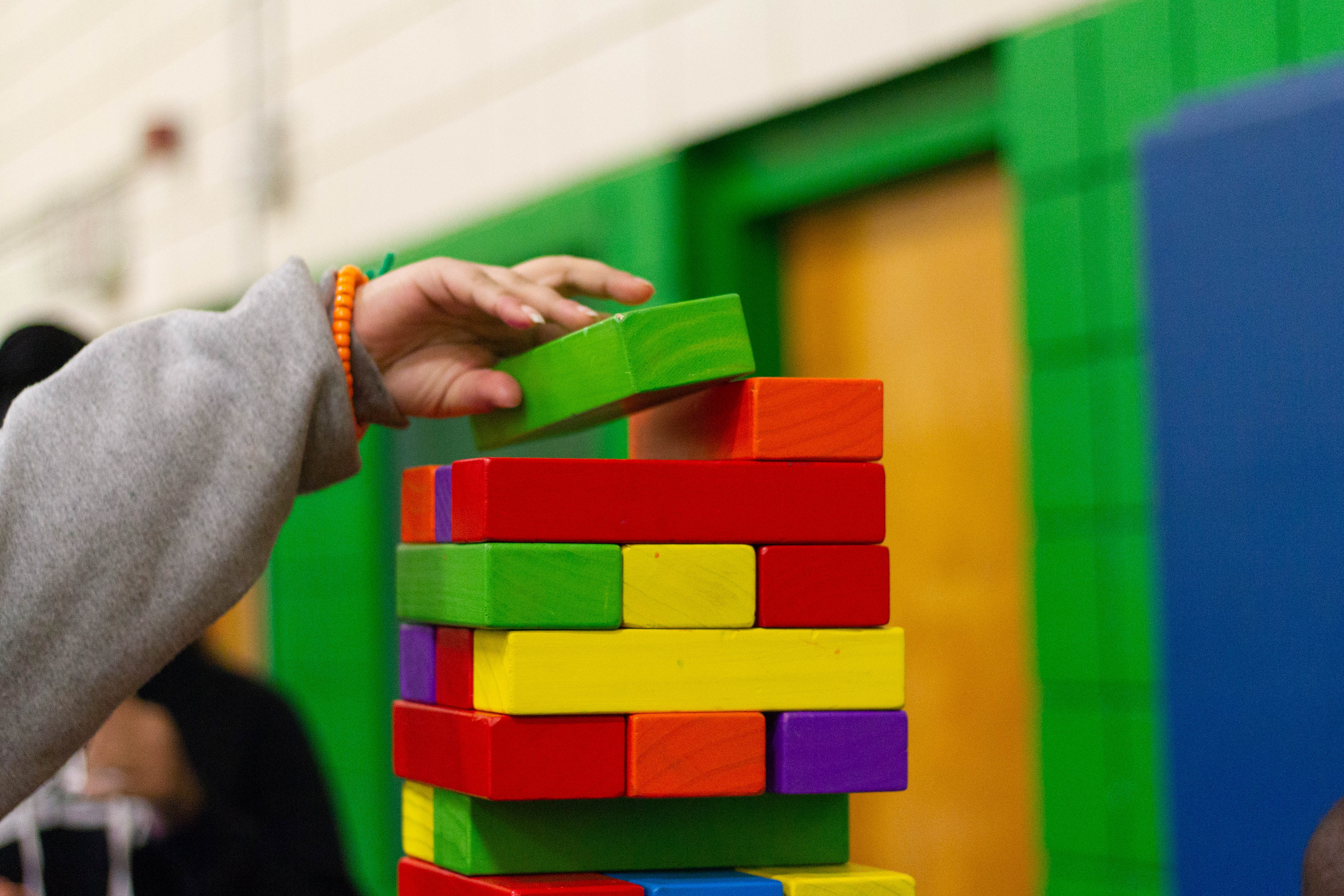
In America we have undergone a significant change in the kindergarten classrooms. Research shows that in all-day kindergarten, children face about two to three hours of direct instruction in literacy and math and about 30 minutes of free play or choice. In many schools, kindergarten literacy and math instruction is delivered in the form of non-negotiable, scripted curricula focused on meeting standards of state testing. In fact, teachers report that even at the kindergarten level they are spending 20-30 minutes per day on test preparation. Children, aged 5 and 6 are spending as much time on test prep as they do in free choice and play. However, a meta-analysis of research found that play is essential in early childhood development because it helps children “expand vocabulary and link objects with actions, develop object constancy, form event schemas and scripts, learn strategies for problem-solving, develop divergent thinking ability, and develop a flexibility in shifting between different types of thought (narrative and logical).” Basically, at that age play is imperative for learning.
Socio-dramatic play predicts improvement in self-regulation, especially for children who are highly impulsive. Learning complex vocabulary, problem-solving, flexibility, shifting between different types of thought, and self-regulation are all imperative skills to embracing agency and building executive functioning, and the opportunity to learn these skills is disappearing from the very place they were once practiced: kindergarten. Eliminating these skills in our current education system becomes problematic because play is paramount to developing the skills kindergartners need to be successful in and out of school. Furthermore, eliminating play and free choice is actually detrimental to the very skills (literacy & numeracy) they are trying to improve, as play is needed to develop the very skills (regulation and executive functioning) that positively predict strong literacy and numeracy skills.
All the way down to preschool, the school day in the United States and the UK are becoming more academic and test focused, but there is plenty of evidence to suggest this is the wrong move. For instance, this is the direction Germany tried to head in the 1960s and 70s. During that time, German schools moved away from play-based kindergarten into academically focused kindergartens in order to meet increasing demands brought on by education reform. But when researchers compared the outcomes of 50 play-based kindergartens to 50 achievement-based kindergartens in Germany they found that by the age of 10, students who attended the play-based kindergartens performed better in reading and mathematics, demonstrated higher levels of creativity and intelligence as well as social and emotional adjustment, and displayed better language skills and agency (Darling-Hammond & Snyder, 1992). These effects are far reaching. With rising rates of depression in teens, higher demand for creativity and intelligence in the workforce, and a greater need than ever to be effective in communication (hello social media!), a kindergarten where children get to develop these important skills through play is more necessary than ever.
If we want students to have a chance for success beyond the walls of school, it’s time we rethink kindergarten again, and allow children to appropriately develop the skills they need to be learners later.
#TrendingForward#RethinkKindergartenAgain
 Trending Forward in Education
Leave a comment